
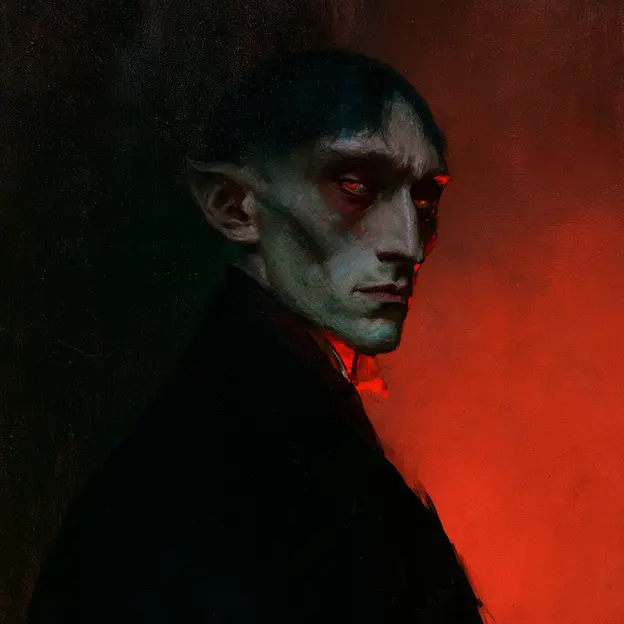
Image by Midjourney.com
Ever since Dracula and Nosferatu, most of the world’s most famous vampires seem to come from Europe. And the ones from America usually originate from New Orleans or a coastal city.
So don’t be surprised if you haven’t heard of the most famous vampire from Colorado. Even though the legend is more than a hundred years old.
Theodore “Fodor” Glava migrated to the United States in the early twentieth century. He was seeking a better life, like many other immigrants, and worked as a coal miner. But how did this man’s seemingly innocuous story become an American legend of the undead?
The Lafayette Vampire is the legendary name given to Theodore Glava, a Romanian immigrant and coal miner who died in Lafayette, Colorado, in 1918. People believed he was a vampire from Transylvania.
After death, his grave was dug up, and scared townsfolk drove a stake through his heart. Some have speculated that Glava was a victim of the Spanish Flu, but the truth remains a mystery.
The Life of a Coal Miner
Theodore Glava arrived in the United States from Romania in the early 1900s, part of a wave of Eastern European immigrants seeking work and a new beginning. Like many who arrived with little more than determination in their pockets, Glava found employment in the booming coal mines that sprawled beneath the Front Range.
Coal mining at that time was brutal, dangerous, and unforgiving. Men worked in cramped, dimly lit tunnels where explosions, collapses, and toxic gases were constant threats. Minor injuries often turned fatal, and major accidents could wipe out entire crews.
The dangers didn’t end underground. Above the surface, disease spread easily among miners living in crowded boarding houses. The specter of the 1918 Spanish Flu loomed over towns like Lafayette, killing workers by the dozens.
Immigrants such as Glava faced language barriers, harsh working conditions, and isolation from familiar traditions. Yet he continued his labor day after day, carving out a life in a land far different from the Romanian hills he once called home.
Life was difficult, gritty, and unpredictable. And for Glava, it set the stage for a legend that would far outlive him.
The Death of a Vampire
Rumors about Theodore Glava began long before his death. Locals described him as having an unusual appearance: gaunt features, deep-set eyes, and an air of quiet mystery. His Romanian heritage fueled the superstition.
To some, the word “Romanian” conjured images of dark forests and ancient vampiric lore. Many residents had only heard of Eastern Europe through ghost stories and penny dreadfuls, so fear filled the gaps where understanding should have been.
Coal towns were thick with superstition. A strange accent, an unfamiliar belief, a shadow cast at the wrong time. It could all spark suspicions in an era when folklore and fear sat just beneath the surface.
Before long, whispers began. Glava didn’t look quite right… didn’t act quite right… didn’t feel quite human. And so the seed of legend was planted.
Glava’s death was never fully documented, but historians believe it was typical of a coal miner’s fate. He likely died from illness, injury, or the lingering effects of the Spanish Flu. With little family and no wealth, he was buried in the poor section of the Lafayette cemetery.
His headstone was simple and unadorned: a modest slab of stone carved with his name and the year he died. The grave attracted no special attention at first. But that would soon change.
Digging the Grave Up
As strange tales of Glava circulated, suspicion turned into fear. Rumors claimed he had been seen wandering the outskirts of town long after his burial. Livestock died without explanation.
Shadows moved where no people stood. In the fevered imaginations of early settlers, these events pointed to one terrifying conclusion: Glava had returned as a vampire.
A group of locals, acting on panic rather than reason, dug up his grave. What they found only deepened their fear. Glava’s teeth appeared unusually long, and his hair seemed to have continued growing after death.
To modern eyes, these are simple signs of decomposition. Skin shrinks, gums recede, and hair can appear more prominent. However, in the early 1900s, the natural processes of decay were not well understood. What they saw, they believed.
The townspeople were convinced they had unearthed a restless creature of the night.
Laying the Spirit to Rest
Determined to end the supposed menace, settlers performed the only ritual they believed would stop a vampire. They drove a wooden stake through Glava’s heart and reburied him deep in the earth.
The story spread rapidly, first through Lafayette, then into neighboring towns, then farther still. Soon, Glava’s grave became a curiosity, a destination for those brave enough to seek out the resting place of a “real” vampire. Even stranger, a unique tree grew right out of the middle of Glava’s grave. Some people say it sprouted from the stake that was driven through his heart.
Over the decades, visitors have left offerings and odd objects on his grave: coins, crosses, garlic bulbs, black candles, handwritten notes, even small glass vials filled with salt. Some claim these are tributes; others say they’re protections against whatever still lingers beneath the soil.
To this day, locals report strange sightings near Glava’s burial site. A tall, shadowy figure drifting between headstones. A sudden cold rush of wind when the night is otherwise still. Footsteps following visitors who walk alone. Some insist they’ve seen a pale face watching from the darkness before vanishing altogether. Whether driven by folklore, fear, or something far older than both, the legend of Theodore Glava, the Lafayette Vampire, refuses to die. This enduring tale is just one example of the many urban legends and ghost stories that have originated in America.
https://usghostadventures.com/haunted-stories/the-lafayette-vampire/ ©2026 US Ghost Adventures. All rights reserved.