
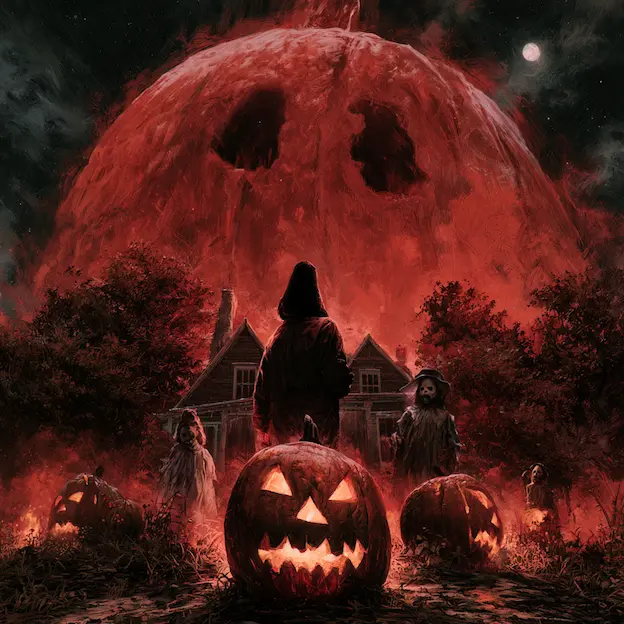
Image by Midjourney.com
The Autumn season is right around the corner and that includes Halloween. People either love it or hate it, fear it or enjoy it. So why is that?
Basically, Halloween is scary because its traditions come from ancient festivals about the dead, seasonal darkness, and the belief that spirits walk among the living. Halloween is not inherently evil, but different people and groups view the holiday in very different ways which is always the problem with any holiday or celebration. Some people view the spooky themes as harmless fantasy and use the night to connect with neighbors. Some religious groups avoid Halloween because of its association with ghosts, death, or past pagan traditions.
The Bible does not mention Halloween because it didn’t exist when the Bible was written. While there is no direct command about the holiday itself, God’s Word gives clear warnings and principles regarding the themes often connected to it:
- The Occult and Contacting the Dead: God explicitly forbids practices like witchcraft, divination, sorcery, and trying to communicate with the dead. Passures like Deuteronomy 18:10-12 state that these actions are detestable to the Lord.
- Darkness Versus Light: Christians are instructed in Ephesians 5:11 to have nothing to do with the fruitless deeds of darkness, but rather to expose them.
- Focus on the Pure and Praiseworthy: Scripture encourages believers in Philippians 4:8 to dwell on things that are true, noble, right, pure, and lovely. 1
That’s pretty much common sense unless you are a practicing dark occultist who finds some value in playing with the darkside.
When I was growing up in the 1970s and 80s, I didn’t know anyone, except a Southern Baptist family, who didn’t “celebrate” Halloween. The hundreds of Catholic and Protestant kids in our grammar schools would dress up in costumes, have school parties, and go trick-or-treating. For weeks leading up to Halloween, we would have school projects that included traditional Halloween images: witches, black cats, jack-o-lanterns, bats, and more. Our parents never questioned if we “should” celebrate the holiday–there was never a belief that what we were doing was evil or unbiblical. – Mary Oelerich-Meyer 1
In other words Halloween for lack of a better explanation is a cultural norm in general and becomes a decision of each individual what to do with it.
All in a Name
The name “Halloween” traces back to Catholicism. Halloween comes from the two words “Hallow,” which means holy person and “e’en,” which is derived from “even” or “evening.” Hallow refers to the “holy people” or the saints celebrated within the Catholic Church on All Saints’ Day, which occurs on November 1. The “e’en” added on the end of “Hallow” indicates that this is the day before All Saints’ Day, as in “All Hallows’ E’en.” You can see, then, how the word “Halloween” came about and how it was originally rooted in honoring both present and departed saints within the Church. The darker side of Halloween has its roots in the Celtic festival of Samhain, which is the celebration of the final harvest before winter. According to Celtic tradition, during Samhain, the veil between our world and the “Otherworld” is thin, which enables spirits from the dead to come back and visit the living. As part of Samhain, the Celts offered food, animals, and even people to the spirit world. In addition to the spirit world being able to visit the real world, the Celts believed witches, goblins, fairies, and demons would roam around the earth and could visit the inhabitants of the earth. The Druids believed in order to appease the demons, witches, fairies, and goblins, you had to leave them sweets or you had to dress up like them in a costume in order to not be detected as a human being.
Huge bonfires would be built, and celebrations would be held in honor of the spirits and the departed souls. The Celtic Druids were known for their celebration of Halloween, as it was honored as the most important holiday of the entire year. The Druids and their people would have festivals, celebrations, and feasts in honor of Samhain.
In the modern day, Halloween is a celebratory time for Wiccans. Present-day Wiccans still celebrate the Celtic festival of Samhain. In honor of the pagan practice of Samhain, Wiccans will burn huge bonfires and other “traditional fire ceremonies to celebrations that embrace many aspects of modern Halloween, as well as activities related to honoring nature or ancestors.” In the past, the church of Satan announced that any person who dresses up for Halloween is the same as worshipping the devil. In other words, according to the church of Satan, participating in Halloween is celebrating Satan and evil. 2
There are certainly enough Halloween themed movies out there using that theme and reasoning.
The bottom line is no one should celebrate evil in any form on any day for any reason.
Anyone can celebrate Halloween in good conscience if they are aware that the holiday is simply a fun time to dress up, give out candy, and spend time with friends and family. There is nothing wrong with participating in Halloween to have wholesome fun – unless of course you are Michael Meyers… his idea of fun is a little different.
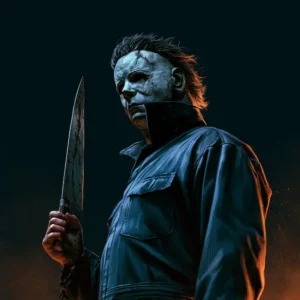
Image by Midjourney.com
Visit https://www.thefactsite.com/100-halloween-facts/ for some fun facts about Halloween!
1.https://www.christianity.com/wiki/holidays/halloween-origins-traditions-and-whether-christians-should-celebrate-it.html
2. https://www.christianity.com/wiki/holidays/why-was-evil-celebrated-on-halloween-in-the-past-and-is-it-still-celebrated-today.html